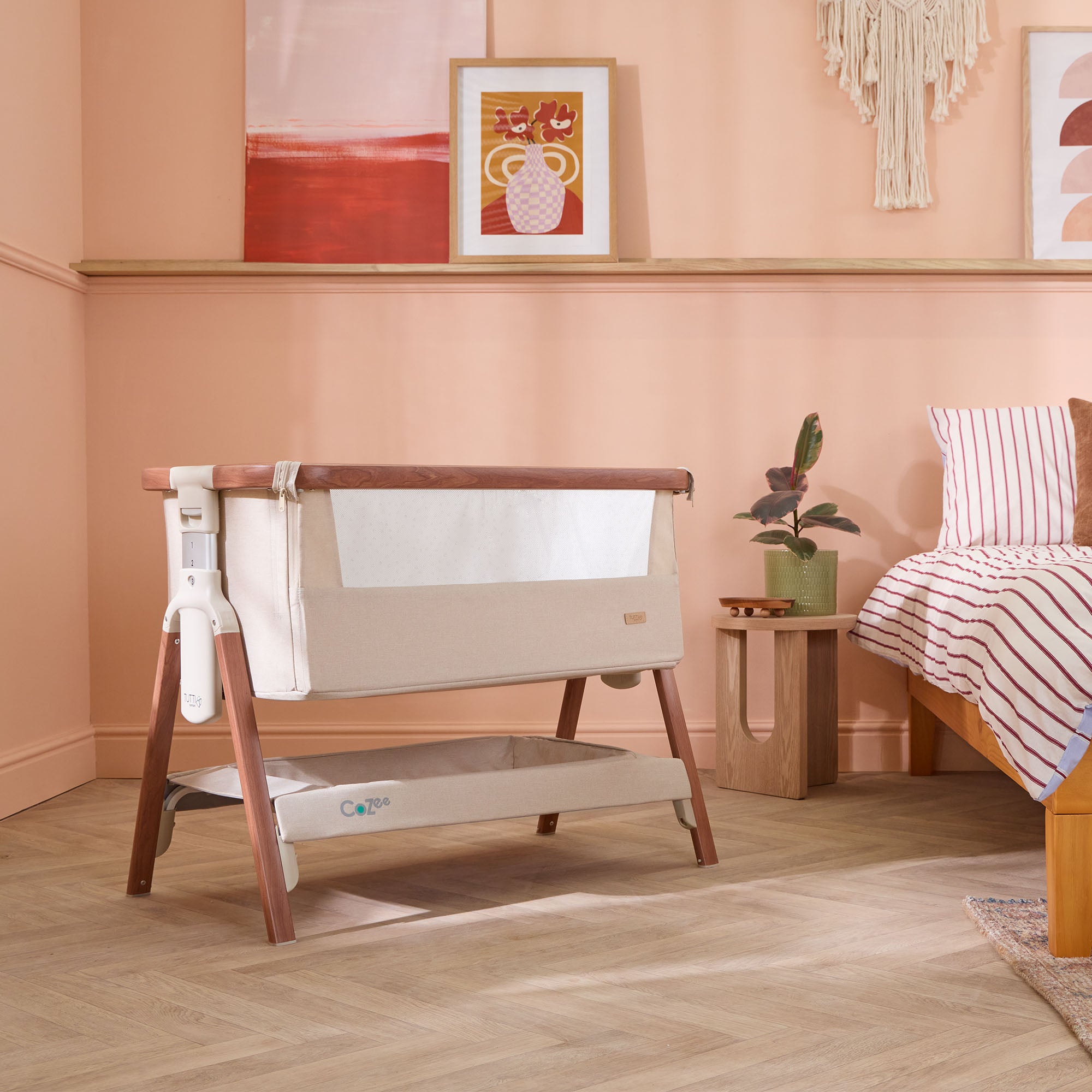
In the early days, most families find that only a small number of items are truly essential. A safe sleep space, such as a bedside crib for keeping baby close at night, a convertible cot bed that grows with your little one, and a simple changing setup are usually the pieces used from day one.
Alongside these, a few feeding and bedding essentials tend to cover most early needs. Other items, including highchairs, weaning accessories, larger toys and decorative nursery pieces, are often better chosen later, once routines settle and your baby’s preferences begin to show. Thinking about your registry in this way can help keep it focused, flexible and shaped around what will genuinely support you from the start.

What A Baby Wishlist Is Really For?
A baby wish list is often seen as a checklist, but at its heart it serves a much simpler purpose. It offers friends and family a way to support you in practical, meaningful ways as you prepare for life with a new baby.
Rather than trying to predict every possible need, a thoughtful wish list reflects the early days you’re about to step into, prioritising comfort, closeness and ease. When approached with this mindset, it becomes less about having everything ready and more about feeling supported as routines slowly take shape.

The Essentials You Will Use From Day One
From day one, a few core items tend to matter most. A safe sleep space, like a bedside crib, helps keep your baby close and comfortable in the early weeks, while a convertible cot bed can grow with them over time. Alongside this, many parents find that a simple, integrated changing setup makes daily care easier, offering a practical place for nappy changes without needing a separate room or overly complex arrangement.
Alongside this, a few bedding essentials can help set up a safe and comfortable sleep space from the start. A firm, flat mattress that fits snugly without gaps, a small rotation of fitted sheets and a couple of baby sleep bags are often all that’s needed in the early weeks. The NHS also outlines other helpful items to have ready, including basics for bathing, getting out and about, and baby clothing, which you can explore here for additional guidance.

Items That Can Wait Until Routines Settle
Many items tend to come into their own a little later, once you’ve had time to settle into daily life with your baby. Highchairs and other mealtime pieces, for example, are usually introduced around the stage when babies begin exploring solid foods, often from around six months, when they’re able to sit more steadily and show interest in food.
This approach is also supported by guidance from the National Childbirth Trust (NCT), which encourages parents to wait until babies show developmental readiness before introducing weaning equipment. Larger toys, activity centres and decorative nursery pieces also tend to feel more relevant as your baby becomes more curious and engaged with their surroundings. Allowing these items to wait can help keep your wish list focused on what supports you now, while leaving space for thoughtful choices as routines gently take shape.

Choosing Pieces That Grow With Your Family
Focusing on items that adapt over time can help a baby wish list feel both practical and considered. Sleep and furniture pieces that evolve with your child, such as convertible cot beds that transition from a cot to a toddler bed and later into a small sofa, offer reassurance well beyond the early weeks.
They reduce the need for frequent replacements and allow familiar routines to continue as your baby grows and their needs change. For many families, these longer lasting pieces become quiet constants in daily life, supporting each new stage without making change feel overwhelming.

Preparing With Care, Not Pressure
Putting together a baby wish list doesn’t need to be about having everything ready at once. By focusing on a few meaningful essentials, leaving space for routines to unfold, and choosing pieces that can adapt as your family grows, the process can feel calmer and more intentional.
In the end, a thoughtful registry is simply one that supports you where you are now, while allowing room for what comes next.