If you’ve found yourself googling “is it normal my baby wakes every two hours” at 3am, honestly, you’re not alone. I have bad news… Broken sleep in the early months is normal. It doesn’t mean you’re doing anything wrong, I promise.
So grab a cuppa (a warm one if you’re lucky) and let’s talk about it.
So what’s actually normal?
Newborns sleep loads, often around 16 to 18 hours a day, though every baby is different. The catch is it comes in little bits. Their tummies are tiny, so they need feeding often, day and night. They also spend much more time in light sleep than we do, which is why they grunt, wriggle and wake up so easily.
The crazy thing is babies aren’t born understanding the difference between day and night. In my experience that body clock usually starts kicking in around three or four months. Before that, waking every two or three hours is exactly what we’d expect.
One thing to keep in mind is that phrase “sleeping through the night”? I’d take it with a pinch of salt. It means something different to everyone. Loads of perfectly healthy babies are still waking at a year old. Try not to compare yours to your friend’s baby. Every baby is different and that’s okay!

The safe sleep bits I really want you to know
This is the part I’m a bit more strict on. The NHS and The Lullaby Trust have really clear guidance (it’s actually pretty simple).
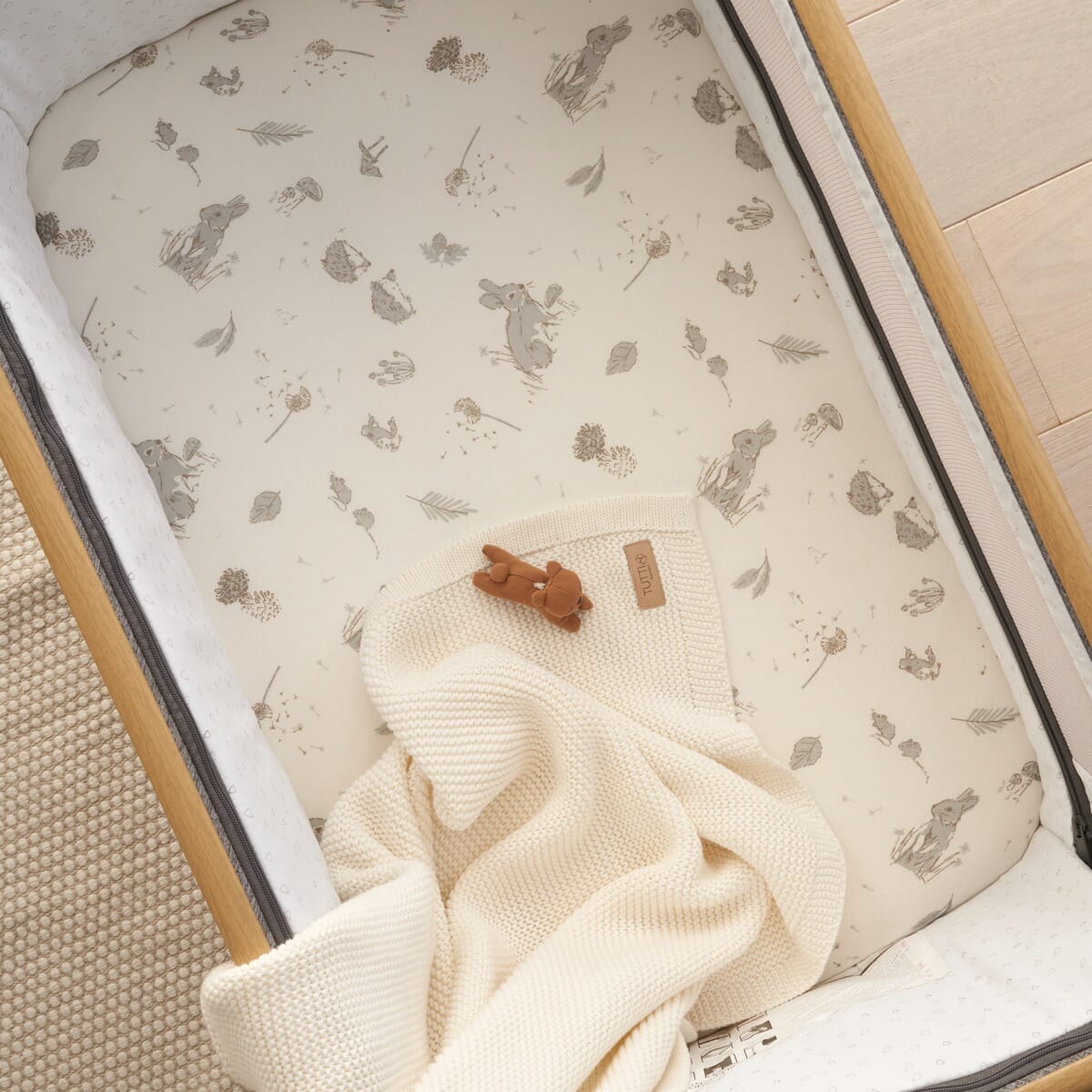
Always lay your baby on their back to sleep, for naps and at night. Pop them with their feet at the bottom of the cot so they can’t wriggle down under the covers. Keep the cot clear. No pillows, duvets, bumpers or soft toys, and no positioners or nests. If you’re not sure what you actually need, this guide to nursery bedding essentials keeps it nice and simple. The mattress should be firm, flat and waterproof.
For the first six months, keep your baby in the same room as you for every sleep, day and night. Honestly, a bedside crib is a game changer for this, especially with night feeds.
Keep the room somewhere between 16 and 20°C. To check if your baby’s too hot or cold, feel their chest or the back of their neck rather than their hands and feet, which nearly always feel a bit cool. And no hats for sleeping indoors.
You’ll probably hear lots of well meaning advice, so here are a couple of things worth knowing. Lots of parents worry their baby might choke if they’re sick while lying on their back, which is such a natural worry. The good news is babies are actually really good at protecting their airway on their back, so it’s still the safest position. There’s also no rush to move your baby into their own room. Keeping them close for the first six months is the safest option and it makes those night feeds much easier too.
When you’re exhausted, it’s so easy to nod off while feeding. If you’re on the sofa or in an armchair and feel yourself getting sleepy, pop your baby down in their crib or move somewhere safer. And if you think you might doze off feeding in bed, The Lullaby Trust has some really helpful advice on co-sleeping more safely, just in case.
Bedtime routines (without the pressure)
In the first few weeks, I wouldn’t worry about a strict routine at all. It’s more about gently showing your baby the difference between day and night. Keep the days bright and normal. Keep nights dark, quiet and boring. Low lights, soft voices, feed, back down.
Once you’re through the first few weeks, lots of families find a little wind down routine helps. A bath, clean nappy, feed, cuddle and into the cot. It doesn’t need to be long. It just needs to feel familiar. A baby sleeping bag can be a nice part of that and it’s much safer than loose blankets too.

Night waking and settling
Feeding at night is normal, and breastfeeding is linked to a lower risk of sudden infant death syndrome (SIDS). You won’t create “bad habits” by going to your baby. They wake because they need something, whether that’s milk, comfort or just you. A comfy, supportive spot for those night feeds makes a real difference too and there are some good tips on finding a nursery chair that works for you.
For settling, do whatever works for you both. Holding them until they’re drowsy, a hand on their tummy, shushing, gentle rocking. If you want to try a dummy and you’re breastfeeding, the advice is to wait until feeding is well established.
If you’ve got a partner, share the nights. One of you could take the early shift and the other the later one, or they could do nappies and settling while you feed. You’re a team.
The clocks going back
The clocks go back on Sunday 25 October, so if your little one normally wakes at 6am, brace yourself for a 5am start.
If you’ve got a newborn, honestly, don’t worry about it. They don’t have a routine yet, so just carry on following their cues.
If your baby is older and has a bit of a routine, you can ease them into it. In the week before, push naps, meals and bedtime later by about 10 to 15 minutes every day or two. Or just switch on the day and let them adjust over the week. Both are absolutely fine. Getting outside in the morning light and keeping their room dark in the evening really helps their body clock catch up.

Getting the sleep space right
When you’re choosing a cot or cot bed, check it meets British Safety Standard BS EN 716. The mattress should fit snugly, with no gap bigger than 4cm around the edges, and it should be firm, flat and waterproof. Ideally go for a new one for each baby. There’s a really handy guide on how to choose the right baby mattress if you want to dig into the details.
For sleepwear, a sleeping bag in the right tog for the room keeps them cosy without any risk of covers ending up over their face. Avoid weighted sleeping bags and anything that props your baby up on a slope. The Lullaby Trust has a helpful page on baby sleeping products if you’re unsure about anything.
And please look after you
The tiredness is real, and it creeps up on you. Sleep when you can, say yes when people offer to help, and let the washing pile up for a bit. It’ll still be there. Talk to your partner or a friend about how you’re feeling.
Call your midwife, health visitor or GP if your baby is really sleepy and hard to wake, isn’t feeding well, has a temperature or just doesn’t seem right, or if you’re worried about their breathing. Trust your gut. And reach out if you’re struggling too. Feeling low, anxious or overwhelmed is so common, and there’s support out there for you. The Lullaby Trust also has a free baby safety helpline on 0808 802 6869 if you want to talk anything through.